Stained Glass and Gift Cards

Last month I preached a sermon on the “full armor of God” in Ephesians 6:10-18. Paul challenges Christians to take up the “sword of the spirit.” A stained-glass window in the Northside sanctuary depicts the apostle’s conversion. A panel portrays a sword with the caption “Spiritus Gladius,” or “Sword of the Spirit.”

I challenged the students in the worship service to locate the stained-glass. I promised a $10 Chick-Fil-A gift card to the first person to find the window. It seemed like a great idea . . . until fifteen children arrived at the same time to claim the prize!

Solomon threatened to cut a baby in half as a legal solution, but I suspected the restaurant might reject fifteen pieces of plastic. A few children offered to forego the prize. The rest divided into two groups of boys and girls who were willing to share the card. Thankfully, I had a reserve tucked in my pocket for a later service. Mischief managed, and crisis averted.

Lessons learned:

  • Children listen during worship
  • Never underestimate the power of a Chick-Fil-A gift card
  • Always remember the law of unintended consequences
  • Boys and girls are born with a sense of equity and fairness
  • Some in every group will sacrifice for the greater good
  • Adults are grown children with a surface veneer of maturity
  • The children will never forget the location of the stained-glass window

For some reason, I’m feeling the urge to get a chicken sandwich, waffle fries, and a chocolate shake!


Boss Day

This week our nation observes National Boss Day. The greeting card industry has designated October 17 to honor those who supervise our labors. Employees reply, “EVERY day is Boss Day!”

Patricia Bays Haroski created the annual observance in 1958. Four years later the governor of Illinois signed a proposal observing the date state-wide. The idea spread across the nation and world.

It turns out that Patricia Haroski worked for her FATHER! She appreciated his gentle, thoughtful manner with the staff. Therefore, she designated his birthday as an annual Boss Day.

The holiday leaves me in a quandary. I’m not sure WHO my boss might be. A district superintendent oversees United Methodist clergy, and a bishop supervises the superintendents; but none of these people manages my daily work.

Jesus said that leaders serve in God’s kingdom.  The congregation I serve has 5,000 plus members on roll. Maybe I work for all of them; but I cannot afford that many gift cards.

Therefore, I’ve decided to honor God on Boss Day. I aspire to love the Lord with all of my heart, soul, mind, and strength. When I do a poor job, a new day dawns to try again. After all, EVERY day is Boss Day.   

Columbus Day

Columbus Day during my childhood celebrated the intrepid explorer. Each October our class recited, “In 1492, Columbus sailed the ocean blue.” We learned about Christopher Columbus discovering America while seeking a new route to India.

Columbus erroneously believed that he found an alternate route to India; and he called the native people “Indians.” The sanitized history of the 1960s taught that Chris and his crew brought the gift of Western civilization to a savage, untamed continent.

Historical “facts” morph over time. Columbus probably didn’t discover the New World first. Evidence suggests Leif Erikson among others visited the land centuries earlier.  

Then there’s the use of the word “discover.” The indigenous people occupied the land for generations. They would have been surprised to learn their home needed discovering. If an intrepid member of the Powhatan tribe sailed a dugout canoe across the North Atlantic, would historians give him credit for discovering England?

This raises another point: the history we learned dealt primarily with Western civilization. Granted, American history emerges from European history. The exploration and colonization of the Americas primarily involved Portugal, England, Spain, and France, although Russia did make inroads on the western coast.

Today’s historians take a global approach to world history. Highly developed civilizations evolved in Central and South America, Africa, the Middle East, and Asia long before Columbus sailed the ocean blue in 1492. Students now learn about Mayan mathematicians, Arabic philosophers, Chinese chemists, and Japanese poetry.

And what to think of Christopher Columbus? Did he bravely set forth on unknown seas to discover a New World? Or did he serve as a chauvinistic agent of the Old World who left pestilence and privation in his wake? The truth rests somewhere between the two extremes. Columbus was neither an unsullied saint nor a stained sinner but a mixture of the two.

Columbus sailed into the unknown on a 70-foot ship. He risked life and fortune on a radical notion of a round world. This week we honor his intrepid spirit of exploration, recognizing that even the best of intentions can have the worst of consequences.

Extravagant Generosity

“You will be enriched in every way for your great generosity.” (2 Corinthians 9:11)

Bishop Robert Schnase published Five Practices of Fruitful Congregations in 2007. He identified principles that growing churches embrace, including Radical Hospitality, Passionate Worship, Intentional Faith Development, Risk-Taking Mission and Service, and Extravagant Generosity.

During our October stewardship emphasis, Northside Church is exploring how to practice Extravagant Generosity as Christian disciples. Schnase wrote,

“Growing in the grace of giving is part of the Christian journey of faith, a response Christian disciples offer to God’s call to make a difference in the world.” He added, “Giving is always extravagant, life changing, and joyous.”

Most stewardship programs stress the church’s need to receive, but the Bible emphasizes the giver’s need to give. Devoted disciples practice financial faithfulness, giving generously and proportionately of their income. I’ve discovered as a pastor that freeing people to give enables them to grow in grace.

God calls us to give a tithe or tenth of our income. Both the Old and New Testament share this principle. cannot negotiate the terms, but we do choose between faithfulness or disobedience. Tithing teaches the lesson that all of our possessions belongs to God.

Jesus said where our treasure is there our hearts will be also. We often think Jesus said just the opposite; but our souls naturally follow our money. We can buy stock in a world going out of business, or we can invest in God’s kingdom that endures forever.

Join us onsite or online during October at Northside Church as we practice Extravagant Generosity.

Little Things

A friend recently shared a poem entitled “Small Kindnesses” by Danusha Lameris. The verses trace the ripples caused by small gestures of love.   

I’ve been thinking about the way, when you walk
down a crowded aisle, people pull in their legs
to let you by. Or how strangers still say “bless you”
when someone sneezes, a leftover
from the Bubonic plague. “Don’t die,” we are saying.

And sometimes, when you spill lemons
from your grocery bag, someone else will help you
pick them up. Mostly, we don’t want to harm each other.

We want to be handed our cup of coffee hot,
and to say thank you to the person handing it. To smile
at them and for them to smile back. For the waitress
to call us honey when she sets down the bowl of clam chowder,
and for the driver in the red pick-up truck to let us pass.

We have so little of each other, now. So far
from tribe and fire. Only these brief moments of exchange.
What if they are the true dwelling of the holy, these
fleeting temples we make together when we say, “Here,
have my seat,” “Go ahead — you first,” “I like your hat.”

These three remain: faith, hope, and love; but the greatest of these is love.

Fall Equinox

The fall equinox occurs this year on Thursday, September 22. The sun crosses the celestial equator into the southern hemisphere as the North Pole tilts away from Sol. The date marks the advent of autumn in the northern hemisphere.  

Most people do not calendar their lives by astronomical dates. We ease into the season, experiencing fall on an installment plan. Consider some extended signs of fall’s arrival.  

  • The first day of school
  • The start of the college football season
  • Labor Day weekend
  • Exchanging shorts for blue jeans and sandals for shoes
  • The burnt-dust breath of a furnace awakened from its summer slumber
  • The scent of fireplace smoke in the air
  • Maple trees blushing bright red
  • Piping-hot chili and cornbread
  • Jack-o-lanterns adorning porches
  • First frost coating lawns in gossamer silver
  • Pumpkin spice flavored food and drinks
  • Homecomings at high schools and colleges
  • Trees shedding brown leaves like unwanted burdens

The Lord calls us to appreciate and enjoy every season of life. Taste, touch, smell, hear, and see that God is good, all the time. All the time, God is good.

WARNING: Focus Your Attention

My SUV’s info screen periodically flashes this WARNING: “Taking your eyes off the road too long or too often while using this system could cause a crash, resulting in injury or death to you or others. Focus your attention on driving.” The message remains until the driver pushes a button on the touch screen.

SUV Information Screen

The notice ironically appears while I’m driving. I’m required to take my eyes off the road to read a warning about taking my eyes off the road. Then I have to fumble with the touchscreen until I hit the right spot. None of this promotes a focus on driving.

File this under the category, “Best of Intentions, Worst of Outcomes.” A message about distractions becomes a distraction, creating the very reality that it seeks to prevent.

Humanity has evolved into a distracted people. People focus on their phones, ignoring everything and everyone around them. Multitasking helps us accomplish a number of simultaneous tasks poorly. Virtual and augmented reality replace reality itself.

Jesus called his followers to have eyes to see and ears to hear. Otherwise, the Lord God Almighty might appear and speak without notice.

Unplug. Unwind. Focus. Attend. Be present. Cultivate mindfulness. Be where your feet are.

In her poem entitled “Aurora Leigh,” Elizabeth Barrett Browning wrote:

Earth’s crammed with heaven,
And every common bush afire with God;
But only he who sees, takes off his shoes,
The rest sit round it and pluck blackberries.

The Faith We Sing

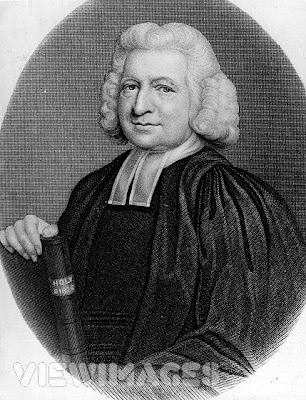
Our fall worship series at Northside Church is entitled The Faith We Sing. The title recognizes the vital nature of music in personal discipleship and corporate worship. We will highlight the hymns of Charles Wesley. Historians recognize John Wesley as the founder of Methodism; but his brother supplied the music that fueled the revival movement.

Charles Wesley wrote between 6,000 and 9,000 songs and poems. He often scribbled verses while traveling on horseback, and scholars estimate he wrote 10 lines daily for 50 years! The law of averages naturally governed the quality of this much output.

John Wesley wrote about his brother’s songs, “Some were good, some were mediocre, and some were exceptional!” No doubt Charles read this and yelled, “MOM!” 

The series is examining four familiar hymns by Charles Wesley that continue to shape our faith, including:

  • September 11              O, for a Thousand Tongues to Sing
  • September 18              Love Divine, All Loves Excelling
  • September 25              Soldiers of Christ Arise
  • October 2                    Come, Sinners, to the Gospel Feast

I invite you to worship with us onsite or online for Traditional Worship at 8:30 and 11:15 along with Contemporary Worship at 9:00. The services and sermons can be accessed later in the week at NorthsideUMC.org under the Worship tab.

Join us as we celebrate The Faith We Sing!

Training for Eternity

My father loved trains. My earliest memories include watching him build HO models on our kitchen table. An elaborate railroad set occupied one-quarter of the basement. The locomotives pulled cars through a multilayered countryside, adorned with bridges, tunnels, crossings, and landscaping.

Following my father’s death, I packed up the train set before selling the home. I discovered a large market does not exist for used model trains. My wife suspended a few red cabooses on wire as Christian ornaments. The rest of the collection currently resides in the garage.

Collectors value vintage locomotives, but the cars and scenery possess more nostalgic than intrinsic worth. They’re too meaningful to discard and too valueless to keep. I contacted a few model train hobbyists, but no one expressed an interest.

Last year I hired a contractor to prepare my father’s home for sale, including dismantling the train tableau. I described the countless hours my father invested in the miniature landscape. The workman observed philosophically, “Well, he got his fun out of it, didn’t he?

The homespun wisdom inspired a smile and some perspective. My dad DID get his fun out of his hobby before detraining at that great Depot in the Sky. Yeah, I know, but that last line made me smile!

Sorting through the accumulations of a lifetime, I recognized that all of our possessions will one day disappear. The world sells worthless stock in a going-out-of-business enterprise. Jesus encouraged his followers to store up treasures in heaven rather than on earth. We’re all training for eternity.

Oh, and contact me if you’re in the market for some HO model trains!

Misplaced Sympathy

This month I received a letter from the hospital system that treated my father. The first paragraph said, “We are truly sorry to hear about your loss. We extend our deepest sympathies to you and your family during this difficult time.”

The note expressed a touching sentiment; but my father passed away in November 2020. I assumed the hospital system knew since he died in its hospice. I received the letter on the twenty-month anniversary of his death.

The second paragraph pushed me over the edge with this generous offer, “Please allow us to assist you by making it a little easier as we pause sending a patient statement for 30 days to allow you additional time to manage associated affairs and deal with your loss.”

The statement revealed the sympathy letter actually served as a collection notice. Following a whole month to manage business affairs and address human grief, the hospital expected the deceased’s estate to pay any balance immediately.

I paid the hospital bill weeks after my father’s death, and the last statement noted a small credit in my favor. I’m still waiting on the refund.

Some computer no doubt sent the notice erroneously, but I cannot describe the mélange of emotions the letter evoked. It stirred up all the feelings of the past year-and-a-half. In response to the letter, I’ve alternated between anger, surprise, anger, grief, anger, loss, and anger!

Someone shared that grief is like a large rock in a fast-moving stream. Time slowly smooths the sharp edges, but the reality remains beneath the water. The smallest things can bring sorrow to the surface again.

After a long pause and a deep breath, I plan to call the hospital’s Customer Service Team. (Sorry, I snickered at the phrase “Customer Service” while typing it!) I will remember that the person on the other end of the line is a person with griefs of his or her own. Maybe my response will save some other family this particular sorrow; but based on past experiences with this particular hospital system, I doubt it.