Church Characters #8: Bill

During a summer rerun series titled Church Characters, I’m recalling some memorable people from decades of ministry.

This week’s blog culminates my series on church characters. Each person played a role in shaping my soul and informing my ministry. I decided to conclude the series by focusing on the biggest church character of all: ME!

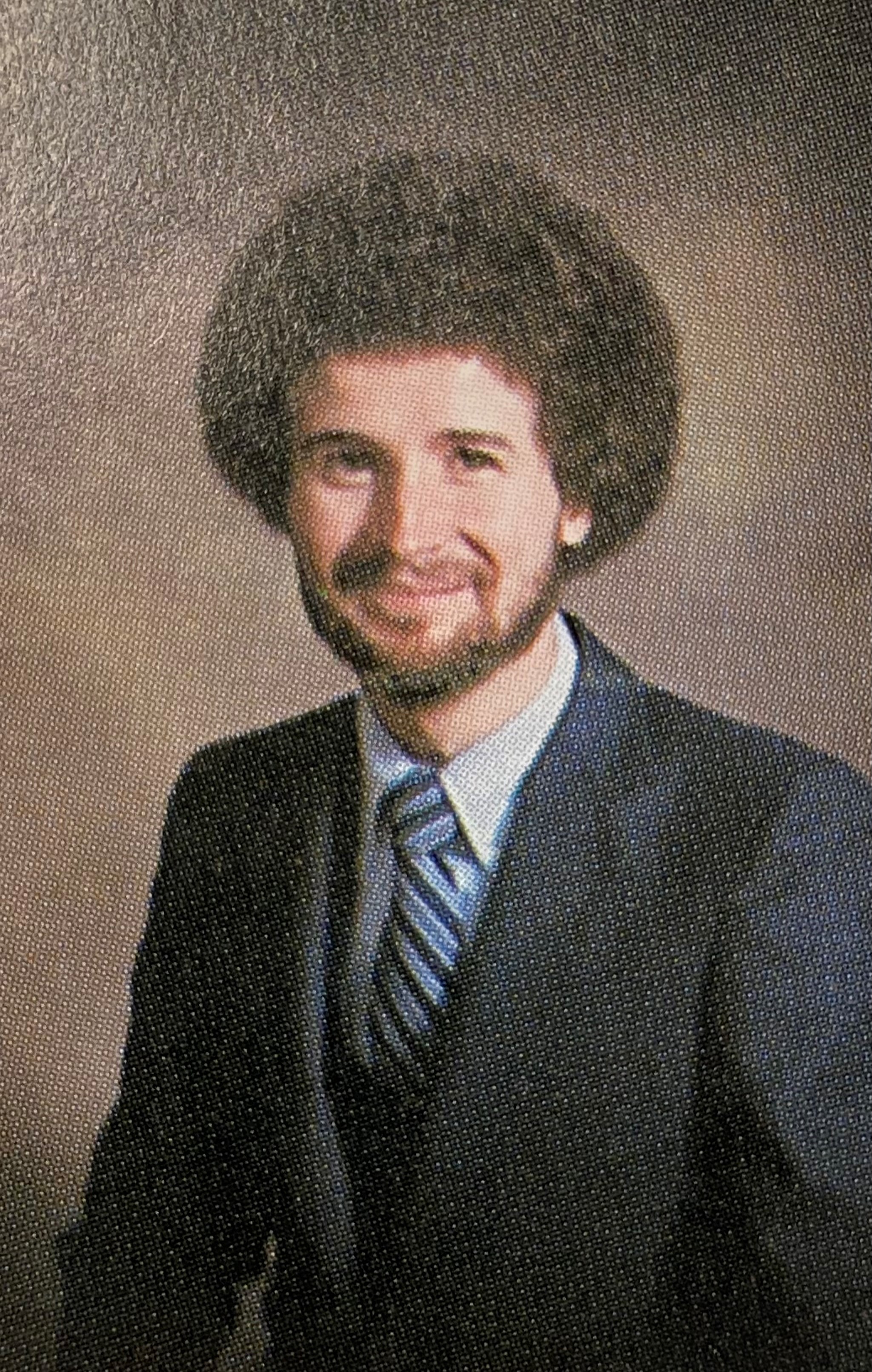
I graduated seminary in May 1982. A month later the bishop appointed me as pastor-in-charge of Mount Carmel and Emory Chapel United Methodist Churches. The congregations outside Newnan, Georgia formed a two-point circuit in order to support a full-time minister.
I preached at Emory Chapel, the smaller of the two congregations, at 9:45 a.m. I sped to Mount Carmel for the 11:00 a.m. service. The larger church also held Sunday night services, which meant preparing two sermons weekly—and sometimes weakly.

The Mount Carmel members built a parsonage next door to the church. The 3/2 home served the needs of a single pastor. The congregation considered central heat and air extravagant luxuries. A wood heater warmed the front part of the house. An attic fan sucked air down the hall during the summer.

I moved to town with all of my worldly possessions in the back of a friend’s pickup truck and my Honda Civic. A 19-inch TV with rabbit ears provided 3 channels of static-filled entertainment. I bought a microwave my first Christmas and felt like royalty.

Four suits composed my entire ensemble, and I wore one per Sunday on a monthly basis. I possessed two pairs of dress shoes and various colors of dress shirts. I owned an iron but no ironing board.

I wince at my inexperience and callowness during those early years of ministry; but the two congregations adopted me as their own. They treasured their role in raising boy preachers to maturity. The members assured me that I would serve great churches in the future. I assured them that I already served great churches in the present.   

I am who I am today because of the people who mentored me in the past. Thanks be to God for church characters. Amen.


Church Characters #7: Sam

During a summer rerun series titled Church Characters, I’m recalling some memorable people from decades of ministry.

The bishop appointed me to First United Methodist Church of Summerville in June 1991. We arrived on Moving Day to discover my predecessor still in the process of moving. Tracy and I walked to the church next door to wait on the moving van.

We met a man in his 70s trimming the shrubs. Sweat-stained and red-faced, he looked like a prime candidate for a myocardial infarction. He switched off the hedge trimmer and extended a sopping-wet palm for a handshake.

The man declared in a loud voice of the hearing impaired, You must be the new preacher. My name is Samuel T. Hell-buck. Every church needs a hell-buck, and I’m yours!

The brother did not lie; well, except for his name. I later discovered he ironically possessed the last name of Bible; but the man lived up to his self-proclaimed title.

After four decades of pastoral ministry, Sam ranks number one among orneriest church members I have encountered. He made my life a living hell, constantly criticizing and complaining. He verbally assaulted me during an Administrative Board, cussing me out because I did not visit his wife in a Chattanooga hospital. The fact that he did not inform anyone about her hospitalization did not matter—I should have known!

Preachers’ stories typically resolve conflicts with happy endings. I would love to describe how Sam and I settled our differences as brothers in Christ; but this never occurred. We chose not to exchange Christmas cards after I moved.

Most pastors aspire to please people and avoid conflict. I learned in Summerville that I cannot please everyone and sometimes conflict is unavoidable.

Samuel T. Hell-buck taught me these valuable lessons.

And by the way, every church does NOT need one.

Church Characters #6: Annette

During a summer rerun series titled Church Characters, I’m recalling some memorable people from decades of ministry.

I visited homebound members on a monthly basis at my first country churches. I regularly saw Annette who lived in a single-wide trailer with her daughter and cats.

Note that I wrote cats plural.

Annette suffered from progressive dementia. She possessed a sunny disposition but comprehended only the simplest conversations. She loved daytime TV and her cats.

Note that I wrote cats plural.

I never tabulated an accurate census of the feline population that milled around in perpetual motion. It totaled over 25 but under 50. After sitting on the sofa, I appeared to be wearing a fur coat while scratching at imaginary fleas.

The olfactory experience of summer visits in the single-wide trailer without air conditioning exceeds my descriptive powers. The heat, humidity, and malodor produced asthma-like symptoms. I welcomed the dog-day heat outside after enduring the cat-stay smell inside.

Annette’s daughter impressed me throughout my tenure at the church. Lou Ellen cared for her mother without complaint, accepting the living conditions with equanimity. Whenever I inquired about her personal wellbeing, she talked about a devotion to her mother who had cared for her.  

People typically assume that the Fifth Commandment instructs young children to respect their parents. Annette’s life testified that honoring our fathers and mothers encompasses a lifetime; and sometimes it includes cats.

Note that I wrote cats plural.

Church Characters #5: Tommy

During a summer rerun series titled Church Characters, I’m recalling some memorable people from decades of ministry.

Tommy attended Mount Carmel United Methodist Church, and his wife played the piano for worship. The devoted family faithfully fulfilled their vows to support the church with their prayers, presence, gifts, service, and witness.

Tommy was the kinda guy who would do anything FOR you and anything TO you. In the latter category, he loved harmless, practical jokes.

A shrub died in front of the parsonage. Tommy served on the Trustees. Rather than replace the plant, he spray-painted the brown branches a bright green.

The United Methodist Men took a mission trip to Louisiana. One evening we went to New Orleans for dinner before strolling through the French Quarter. Tommy delighted in pointing out every clothing optional establishment to his young pastor.

Tracy and I married in May 1986. While away on our honeymoon, Tommy sowed the parsonage lawn with fescue and rye before applying a liberal amount of fertilizer. I cut the grass every 3 days that summer. The churchman explained that he was concerned I might have nothing else to do as a newlywed.

Tommy was the type of guy who would do anything FOR you and anything TO you. In the former catalog, he supported his pastor with love and compassion.

The country church introduced me to deer hunting. Tommy showed me how to field dress and butcher my first deer.

A wood heater warmed the parsonage. I purchased a chainsaw, and Tommy taught me how to cut firewood. I attribute my current possession of ten digits to his past instruction.

Most of all, Tommy offered wise counsel to a pastor fresh out of seminary. He helped me understand how to minister to the congregation and community. I remain grateful for his friendship and support during my first five years of ministry.

May all of us be the kinda person who will do anything for others.

Church Characters #4: Wilmer

During a summer rerun series titled Church Characters, I’m recalling some memorable people from decades of ministry.

The bishop appointed me to a two-point circuit after graduating from seminary. Mount Carmel was the larger of the two churches founded in 1840. The original, white clapboard sanctuary still stood, but rotten wood sills made it uninhabitable.

A new, two-story building stood next door. The congregation first completed the Sanctuary on the main level before beginning work on the education space below. The Sunday School area took another year to finish.

A congregation member named Wilmer oversaw the project. The general contractor invested countless hours into his church home. In addition to regular churchwide work days, Wilmer often worked alone on nights and weekends.

Wilmer and I came from radically different worlds. Wilmer grew up in Coweta County and possessed a high school degree. He took a conservative view of the world. I grew up in Decatur before our family moved to Woodstock. I attended college and then seminary. I must have appeared to be a flaming liberal in his eyes.

We both loved the church in general and Mount Carmel Church in particular. We sometimes agreed to disagree, but neither of us ever questioned the other’s faith and devotion.

One fall day I received a frantic call from a family member. Wilmer lost his grip on a pneumatic nail gun while framing a house. It landed atop his head, driving a nail through his skull and into the brain.

I waited long hours with the family in the Emergency Room. The doctor later told us he literally used a claw hammer to remove the nail. Despite bleak warnings about brain damage, infection, and long-term effects, Wilmer recovered completely.

I don’t believe the Lord dispenses miracles based on merit. Wilmer’s selfless work on behalf of the church PROBABLY didn’t affect his medical results.

But . . .

I cannot help but suspect that Jesus intervened in a special way for a fellow carpenter.

Church Characters #3: Glenn & Lizzie

During a summer rerun series titled Church Characters, I’m recalling some memorable people from decades of ministry.

Glenn and Lizzie belonged to the first church I served after seminary. They lived in a gray-weathered, clapboard house near the parsonage. The living room featured a wood heater stoked yearlong. On frigid winter days, I exited the home soaked in sweat.

An ancient chimney vented the smoke. One memorable afternoon Glenn decided to burn off the soot and creosote by firing up the heater to a cherry red. I followed the fire engine sirens to the house. The tinder-box home miraculously escaped burning to the ground.

Glenn continued to work the old family farm despite age and health. The octogenarian wore a brace that supported his entire back, causing him to cant forward at a 45 degree angle. One summer I helped him carry corn to a mill where the ramshackle, rumbling contraption converted the ears into meal.

Lizzie suffered every illness known to medicine. She kept the kitchen cabinets stocked with prescription bottles that avalanched to the counters below. The matriarch moaned about imminent death throughout the five years I served the church.

Glenn and Lizzie married in their twenties and celebrated 65 years of marriage during my tenure. Although they bickered and disagreed, they honored their vows with love and respect. The couple sat in matching recliners, passing the time together.

Hallmark never would make a movie about their lives, but I am grateful for older couples who model marital fidelity. Glenn and Lizzie made quite the pair in this world and the next.  

Church Characters #2: Uncle Bud

During a summer rerun series titled Church Characters, I’m recalling some memorable people from decades of ministry.

Uncle Bud belonged to a congregation I served fresh out of seminary. Southern social conventions allow older persons to be called uncle or aunt even when no biological connection exists. The gentleman in question served as a surrogate grandfather in my life.

Bud resembled an older Samuel Clements with gray hair and drooping mustache. His wife died years previously, and he still grieved her loss. The octogenarian did not lack for female attention. Women flocked around him, including a group of 30-somethings who regularly dropped by for lunch.

I was a single pastor in his twenties serving two country churches in the middle of nowhere. I envied Bud’s way with the ladies. He tried to help, introducing me to women as my single preacher who could really use a date! I do not recommend this method for anyone seeking a mate.

The church’s patriarch attended worship every Sunday.  I learned to seek his counsel over a myriad of topics. Bud’s words and actions shaped my early ministry.  I appreciated his life and grieved his death.  

Bud’s life illustrated the adage, There may be snow on the roof, but there’s fire in the furnace! Psalm 92:14 frames the same sentiment more theologically, They still bear fruit in old age; they are ever full of sap and green.

May God grant each of us the blessing to grow old with grace.   

Church Characters #1: Miss Frances

Dixie Carter played Julia Sugarbaker on the series “Designing Women” She declared in one scene, I’m saying this is the south. And we’re proud of our crazy people. We don’t hide them in the attic. We bring ‘em right down to the living room and show ‘em off!

I recall many characters from country churches who personified Ms. Carter’s statement. I am recalling some memorable church members from decades of ministry in a blog series titled Church Characters.

“Miss” Frances belonged to Emory Chapel United Methodist Church near Newnan, Georgia. She played the piano in her youth at the local theater for silent movies. The elderly matriarch still played at the church on occasion, but the notes oozed like cold molasses in wintertime. A single hymn could last an eternity.

I often visited Frances at home with her husband, John. The vain man never wore his hearing aids, so I shouted over the TV. My hostess served sweet tea in dirty glasses while an oscillating fan stirred the musty air.

The couple owned an ornery Chihuahua named Peanut. The mutt took an instant disliking to me. The canine terrorist hiked his leg and baptized my ankle during my initial visit.

Both Frances and John died during my five years at Emory Chapel. Peanut sadly survived.

I sat beside Frances’ hospital bed before her death. She squeezed my hand tightly and said, When I die, you tell them at the funeral that I’ve gone on to my glory!

She did, and I did.

I will leave Peanut’s eternal fate to the reader’s imagination.

Glory hallelujah. Amen.   

America the Beautiful

Fourth of JulyOn July 4, 1776, our nation’s founders signed the Declaration of Independence. The Philadelphia document formalized the American rebellion against British rule. This week we celebrate over two centuries of freedom with parades, flags, picnics, and fireworks.

Many will also ATTEMPT to sing our National Anthem. Every school child knows the story behind The Star Spangled Banner. Francis Scott Key was a gifted poet who found himself unexpectedly detained on a British frigate. He witnessed firsthand the English attack Fort McHenry in Baltimore, Maryland. After the night’s artillery bombardment, Key peered through the dawn’s early light to see the American flag still flying proudly.

Inspired by the sight, Key scribbled some notes on the back of an envelope. His musings evolved into a four stanza poem. On September 15, 1814, a Baltimore newspaper first published The Star Spangled Banner.

Ironically, Key suggested the poem be sung to a popular BRITISH tune entitled To Anacreon in Heaven. The melody was originally composed for a gentlemen’s music club in London. The song quickly became popular across America. However, Congress did not actually make The Star Spangled Banner our National Anthem until 1931.

Although our national anthem is inspiring, the tune is somewhat, uh, challenging to sing. Amateur and professional vocalists alike struggle to do the tune justice.

In recent years, some have suggested changing the National Anthem to America the Beautiful.  It is a powerful hymn with moving imagery; AND it is much easier to sing!

Katherine Lee Bates wrote America the Beautiful in the nineteenth century. Dr. Bates, the daughter of a minister, became a professor of English Literature at Wellesley College. In 1893, she stopped in Chicago during a trip to Colorado Springs. Both the natural beauty of Colorado’s “fruited plains” and the “alabaster city” of the Chicago World Fair inspired her to write the well-known hymn.

Regardless of one’s national origin, all of God’s people can sing some of the lines together:

God shed his grace on thee,

And crown thy good with brotherhood,

From sea to shining sea.

 May God thy gold refine,

till all success be nobleness,

and every gain divine.

On July 4th, we pause to give thanks for the freedoms we enjoy. Our liberty is a precious gift dearly obtained. The star spangled banner still waves over America the beautiful. May God continue to bless our nation—land that we love.

Happy Independence Day!

Gratitude Attitude

An optimist views a glass as half-full.

A pessimist sees a glass as half-empty.

A realist realizes the glass needs to be washed.

We view life through glasses that affect our vision. Perspective informs experience, and perception becomes reality. We see what we seek.

Friends snicker at the thought, but I began life as a wild-eyed optimist. Then life happened. These days I am a recovering pessimist who realistically aspires for more.

Therefore, I chose GRATITUDE as my 2025 Star Word. An attitude of gratitude practices three disciplines:

  • Recognize the gifts
  • Recognize the Giver
  • Give thanks

I begin each day with The Lord’s Prayer. Then I list five blessings in life. I recognize that God is the author of every good and perfect gift. I conclude by saying, “Thank you.”

A gratitude attitude transforms how we see the world; but I am still enough of a realist to realize that someone needs to wash the glass.