Synchronicity

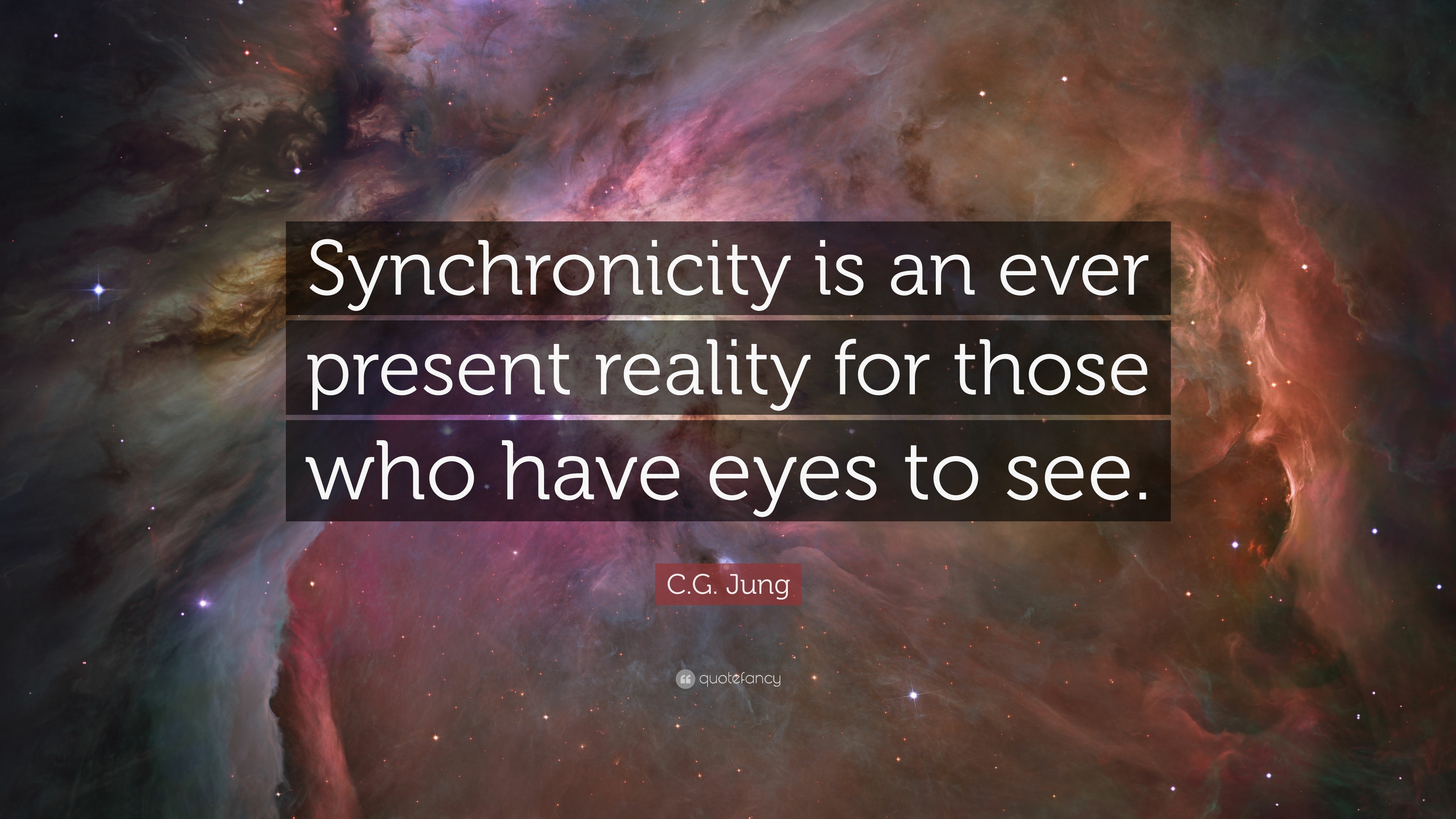
The 20th century psychologist, Carl Jung, coined the word, “synchronicity.” The term refers to “meaningful coincidences” in life. An individual experiences profound significance in seemingly random events.
I wrote a pastoral letter that highlighted Jesus’ words in Matthew 11:28, “Come to me, all you who are weary and burdened, and I will give you rest.” The following Sunday’s anthem planned weeks ahead of time by the music team echoed the same passage. The next week a devotional from another source quoted the verse.

The world might call this happenstance. Christians experience a spiritual synchronicity that sees divine meaning in worldly coincidence. The Holy Spirit wanted to impress Christ’s words upon my heart.

“God-winks” occur on a daily basis for those with eyes to see and ears to hear; but we are a goal-oriented people who have no time to turn aside for burning bushes. The tyranny of the immediate blinds us to theophanies along the way.

Jesus called out to God in John 12:28-29, and the Lord answered. Some said they heard an angel speak. Others said it thundered. The crowd experienced the same event in two radically different ways.

Pay close attention to the coincidences of life. We might just spy the Holy Spirit hovering in the wings.

April Showers

April showers bring May flowers.

My mother taught me this couplet in childhood. The meaning seemed obvious even to a little boy. Flowers need rain to grow.

According to the Internet, the source of all factual knowledge, the short poem originated in the 12th century. Thomas Tusser included the verse in his collected works titled, A Hundred Good Points of Husbandry. I apologize, good reader, but I did not research the other ninety-nine points.

Tusser may have “borrowed” his rhyme from a passage in “The Canterbury Tales.” Chaucer wrote:

When in April the sweet showers fall
That pierce March’s drought to the root and all
And bathed every vein in liquor that has power
To generate therein and sire the flower.

I personally prefer Beverly Burch’s version to Geoffrey Chaucer’s verse!

Others seek deeper meaning in the words. We live in a fallen world where it rains on the just and unjust alike. God uses life’s storms to cultivate spiritual virtues. All sunshine a desert makes. We discover divine blessings grow in the aftermath of earthly torrents.

April showers bring May flowers; but do you know what May flowers bring? The Pilgrims!

May God grant appropriate measures of rain, sunshine, and flowers in our lives.     

Epitaph

I lived beside church cemeteries during my first two pastoral appointments. I often visited the graveyards, pausing to read the monuments. The tombstones inspired me to write my own epitaph, including:

  • Gone But Not Forgotten Asleep in the Lord
  • Beloved Husband, Father, and Nobel Prize Winner
  • I Told You I Was Sick!

Regardless of the words they grave for me, one day I will not be. Even lines etched deep in granite will weather and fade over time; but I will not be forgotten. One will still know me by name. God’s children never perish.

John Donne wrote in this class poem, Death Be Not Proud: “One short sleep past, we wake eternally, and Death shall be no more: Death, thou shalt die.”

The apostle Paul declared in 1 Corinthians 15:55-57: “Where, O death, is your victory? Where, O death, is your sting? The sting of death is sin, and the power of sin is the law. But thanks be to God! He gives us the victory through our Lord Jesus Christ!”

We celebrated the good news of the Resurrection on Easter Sunday. No tombstone marks Jesus’ grave. The first disciples discovered an empty tomb. The angelic proclamation echoes in our ears, “Why do you look for the living among the dead? He is not here; he has risen, just as he said!”

Simply inscribe my name and the two customary dates on my gravestone. Place a comma rather than a period after the date of death.

Easter reminds us that death is not THE END but a new beginning for all who trust in the Lord.